What Is Blogging? A Complete Guide for Beginners
At first glance, the question “What is blogging?” sounds almost rhetorical. Most people think they already understand it: there is a person, there is a blog, there are articles online. But if you ask someone who has never actually run a blog what blogging really means in practice, the answer usually becomes vague and uncertain. It is similar to how many people “understand” what it means to compete in the Olympics or run a company — until they experience it themselves. Real understanding only comes through experience.
That is why, before taking the first step, it is worth honestly understanding what blogging truly is, what it demands, and what it can give in return.
Table of Contents
What Is Blogging: Definition and Core Meaning
Officially, a blog is an informational or discussion-based website where posts appear in reverse chronological order, meaning the newest publication is always displayed first. That is the technical definition you will find on Wikipedia. It is accurate, but it explains almost nothing about the real essence of blogging.
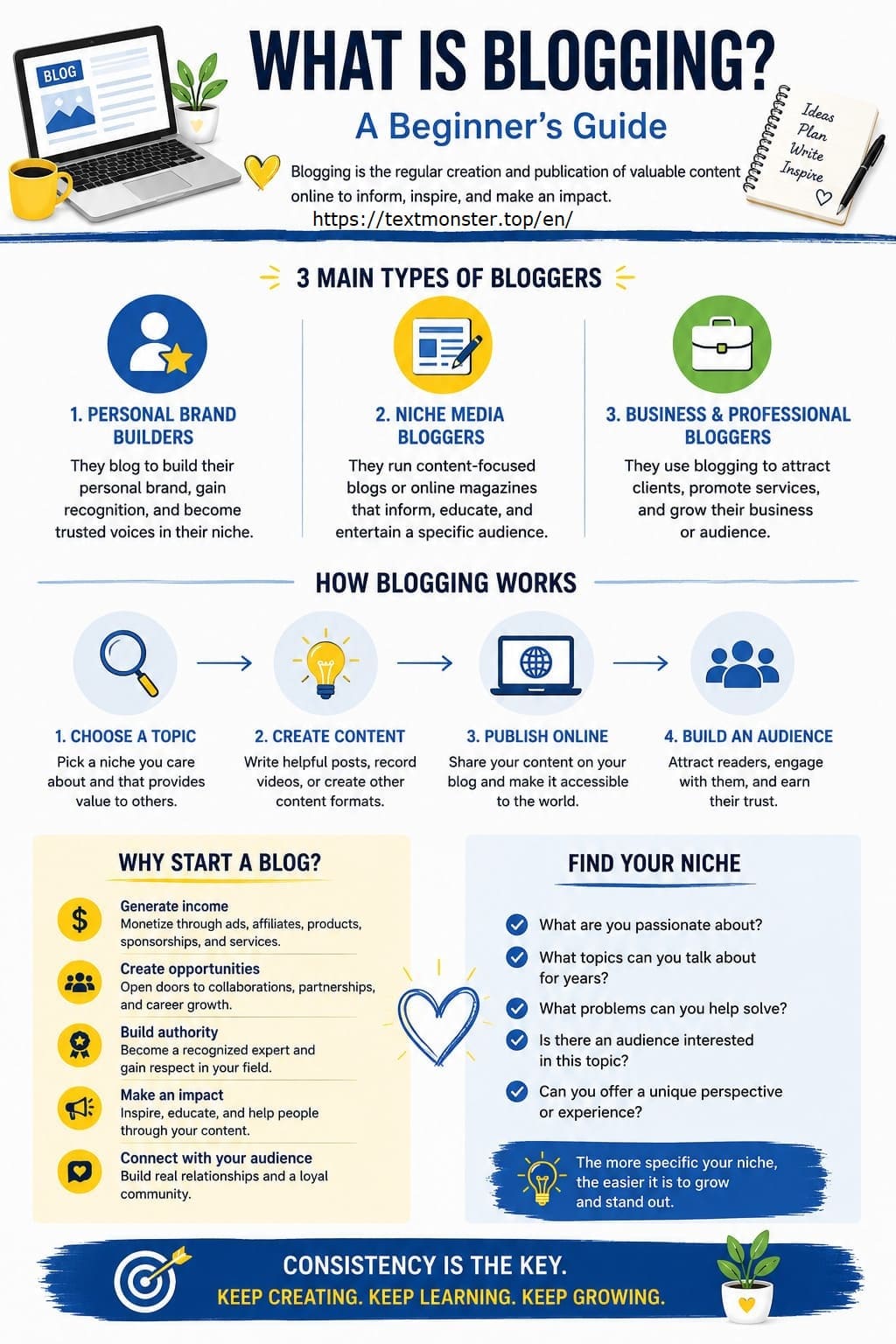
In reality, blogging is the regular creation of content — articles, videos, podcasts, photos, depending on the format — and publishing that content online. But the most important questions are not “what” or “how.” The real questions are “why” and “about what.” The answer is simple: people create content about things that matter to them in order to achieve a specific goal.
A Blog as a Key to New Opportunities
Imagine standing in a room surrounded by locked doors. On each door there is a sign:
- income;
- new opportunities;
- professional respect;
- expert authority;
- status;
- clients;
- meaningful communication.
Most people feel that at least some of those doors remain closed in their lives. A blog is a universal key that can eventually unlock every one of them. Not all at once, and not always in the order you expect. But if you consistently work on your content, those doors begin to open one by one.
That is why blogging is not simply a hobby or just another business tool. When approached correctly, it becomes a platform capable of transforming your online presence into real influence and tangible results.
Are Bloggers Journalists?
The answer is more complicated than it may seem. We live in an era where the line between traditional media and independent creators is becoming increasingly blurred.
How the Media Landscape Is Changing
On one side are traditional media outlets: newspapers, television channels, and news agencies. For decades, many of them relied on printed subscriptions or traditional advertising models to survive. On the other side is the internet, where most information is expected to be free. This conflict forced media companies into difficult decisions.
Some publications, such as The Times, successfully built paid subscription systems and monetized their audiences. Others, such as the British tabloid The Sun, attempted to place content behind paywalls but eventually reopened access because readers were unwilling to pay. This was not failure — it was simply the reality of a changing media industry.
The Difference Between a Blogger and a Journalist
In short, the difference lies in workflow, focus, and audience relationships.
A journalist usually writes on many topics according to the editorial policy of a publication. A blogger, however, often chooses a single niche and develops it over many years, creating a recognizable personal voice. Readers visit journalists for information. Readers return to bloggers for the author.
There is another major difference as well. Traditional media organizations have editors, photographers, designers, and technical staff. Bloggers often do everything themselves — writing, editing, filming, designing, and sometimes even maintaining the website technically. This is not a weakness. It is simply a different model that offers complete creative control.
Bloggers-Journalists or Journalists-Bloggers?
A simple “yes” or “no” does not work here. Some bloggers — especially those who run news-oriented projects — absolutely perform journalistic work. But many others belong to entirely different categories:
- writers who found their own platform;
- editors curating specialized topics;
- creative directors of personal media projects;
- activists and public voices;
- critics and reviewers;
- niche experts and educators.
Back in 2016, British journalist Piers Morgan publicly stated that print journalism had less than twenty years left. “This is a new world,” he said. “Time to get off the penny-farthings.” Years later, the direction of the industry only continues to confirm that prediction.
The internet gave everyone with something meaningful to say the opportunity to be heard. And today, some bloggers reach larger audiences than traditional media companies spending millions on content production.
All Successful Bloggers Share One Common Trait
They become influential voices — what we now commonly call influencers.
Why Influencer Marketing Replaced Traditional Advertising
Modern consumers have learned to ignore advertisements. Banners, sponsored posts, and video ads are often treated as background noise that nobody fully trusts. People understand that when a company praises itself, its goal is ultimately to sell something.
The reaction is very different when advice comes from a real person who has experience and genuine expertise. Before booking a hotel, people read reviews. Before buying a laptop, they watch YouTube reviews. Before enrolling in an online course, they look for community recommendations.
A blogger who has earned trust inside a niche is often more valuable to brands than direct advertising campaigns. And companies are willing to pay significant amounts for that trust.
How the Influencer Ecosystem Works
An important detail: influence is usually niche-specific. Someone may be the most respected expert in home hydroponics while remaining completely unknown outside that community. Yet within that niche, their opinion carries enormous weight.
The blogging world works like nested layers: large niches contain smaller sub-niches, which contain even more specialized audiences. A fashion blogger and a tech blogger may live in completely separate universes, but each remains essential for brands operating in that segment.
Different companies seek different creators, and even the same brand may collaborate with entirely different types of bloggers depending on the campaign.
Three Main Types of Bloggers
Regardless of niche or platform, most bloggers fall into one of three categories:
- People building personal status and recognition.
- People running a niche blog as an independent media project.
- People using a blog to promote a business or professional services.
All three approaches can become successful. The main difference lies in the author’s goals from the very beginning. Most creators also combine their main website with social media platforms where they publish exclusive videos, stories, and short-form content.
Every Blogger Eventually Finds a Niche
Why “A Blog About Everything” Rarely Works
In the early days of blogging, many people simply wrote about everyday life: waiting in government offices, traveling, cooking dinner, random observations. Friends and relatives might find that interesting, but from a growth perspective, it often becomes a dead end.
The reason is simple: if readers cannot clearly understand what your blog is about and who it is for, it becomes difficult to build a loyal audience or monetize the project. Brands look for creators with clearly defined audiences, not random traffic.
What Is a Blogging Niche?
A niche is a clearly defined focus: a specific topic or audience around which the entire blog is built. Examples include:
- cooking for busy parents;
- road trips across Ukraine;
- SEO for small businesses;
- personal finance for freelancers.
The more precise the niche, the easier it becomes to:
- attract readers who genuinely care about the topic;
- rank in search engines for specific keywords;
- offer brands advertising opportunities that naturally fit the content.
A blog with a smaller but highly targeted audience can often generate more income than a large entertainment website simply because its audience is engaged and valuable.
Later we will discuss niche selection and analysis in greater detail. For now, here are three directions most successful bloggers eventually follow:
- Building personal authority through blogging.
- Creating a niche media project or online magazine.
- Using blogging to strengthen a business and attract clients.
FAQ: Common Questions About Blogging
What Is Blogging in Simple Terms?
Blogging is the regular publication of original content on a website or platform. The author chooses topics, writes articles (or creates videos and podcasts), publishes them online, and gradually builds an audience.
Do You Need Technical Skills to Start a Blog?
No. Modern platforms such as WordPress, Blogger, and Substack allow anyone to launch a blog without programming knowledge. Technical skills become useful later if you want more control over your project.
How Long Does It Take for a Blog to Show Results?
The first meaningful results — traffic growth, subscribers, or brand inquiries — usually appear after 6–12 months of consistent work. Blogging is not a fast path, but it can become a stable long-term asset.
Can You Make Money Blogging in Ukraine?
Yes. Ukrainian bloggers monetize their content through advertising networks such as Google AdSense, direct sponsorships, affiliate programs, online courses, professional services, and reader support platforms like Patreon or Buy Me a Coffee.
What Is the Difference Between a Blogger and a Journalist?
A journalist works for a media organization and follows editorial policies. A blogger is an independent creator who chooses topics, style, and format independently. Journalists are employees. Bloggers are usually creators or entrepreneurs.
Do You Need to Publish Content Regularly?
Consistency is one of the most important growth factors. You do not need to publish daily, but maintaining a stable schedule — for example, once a week — helps both search engines and readers return for new content.
Is It Better to Start With a Website or Social Media?
The best strategy is usually a personal website as the foundation, combined with social media as distribution channels. A website gives you control over your content and traffic, while relying entirely on social media is risky because algorithms constantly change and accounts can be restricted or removed.